

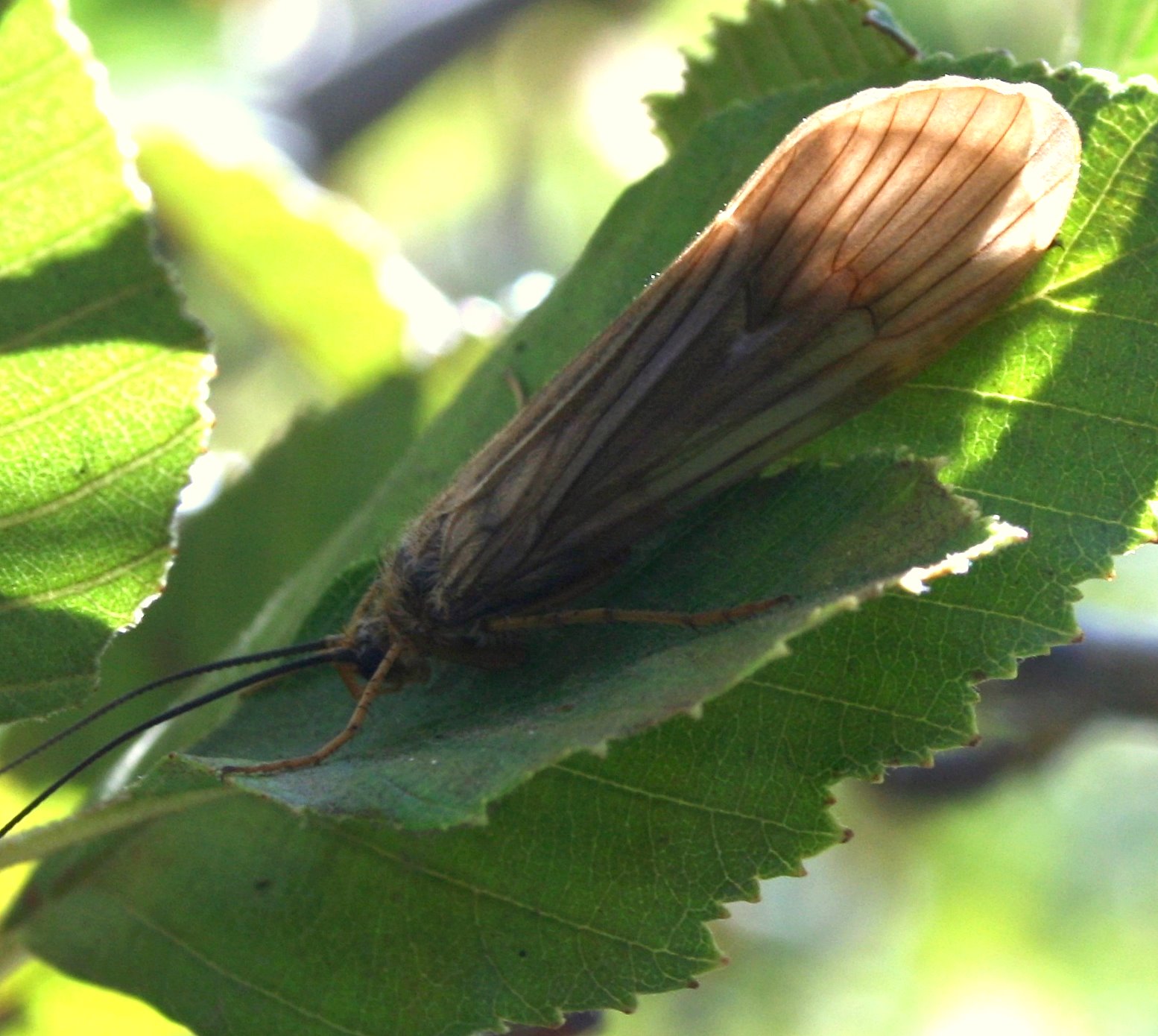
Larva & Pupa Biology
Current Speed: Slow water early; faster water in later instars (Instar: Many invertebrates molt through dozens of progressively larger and better-developed stages as they grow. Each of these stages is known as an instar. Hard-bodied nymphs typically molt through more instars than soft-bodied larvae.)
Shelter Type: Plant matter early; gravel in the later instars (Instar: Many invertebrates molt through dozens of progressively larger and better-developed stages as they grow. Each of these stages is known as an instar. Hard-bodied nymphs typically molt through more instars than soft-bodied larvae.)
The larvae are unusually prone to behavioral drift (Behavioral drift: The nymphs and larvae of many aquatic insects sometimes release their grip on the bottom and drift downstream for a while with synchronized timing. This phenomenon increases their vulnerability to trout just like emergence, but it is invisible to the angler above the surface. In many species it occurs daily, most often just after dusk or just before dawn.) during the daytime in June and July, usually around 4:00 p.m. They may be in between cases when they do this, making them especially appealing and visible to hungry trout.
In mid- to late summer they enter diapause (Diapause: A state of complete dormancy deeper even than hibernation. While in diapause, an organism does not move around, eat, or even grow. Some caddisfly larvae enter diapause for a few weeks to several months. Some species of microscopic zooplankton can enter diapause for several hundred years.) until cooler fall temperatures trigger them to pupate in a synchronized way.
http://www.troutnut.com/hatch/2594/Caddisfly-Dicosmoecus-Giant-Orange-Sedges
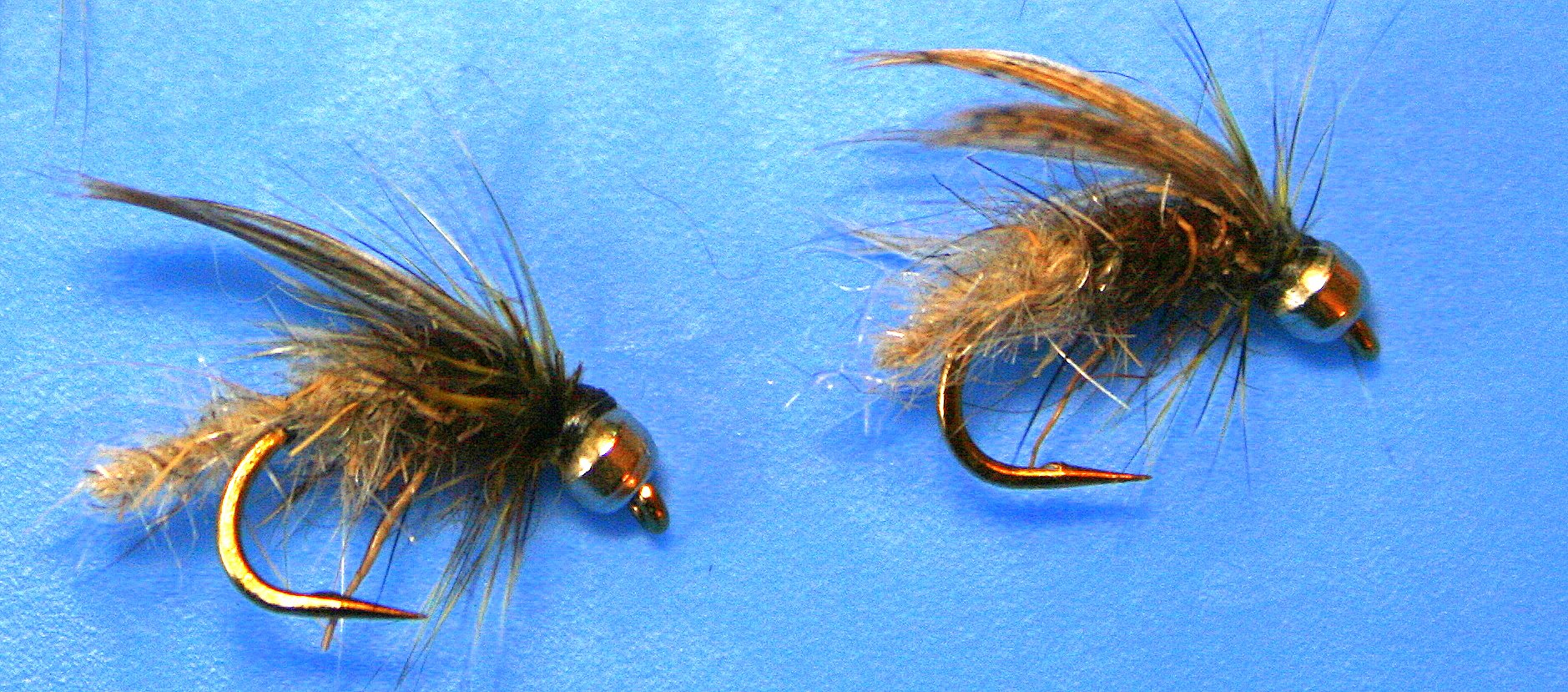
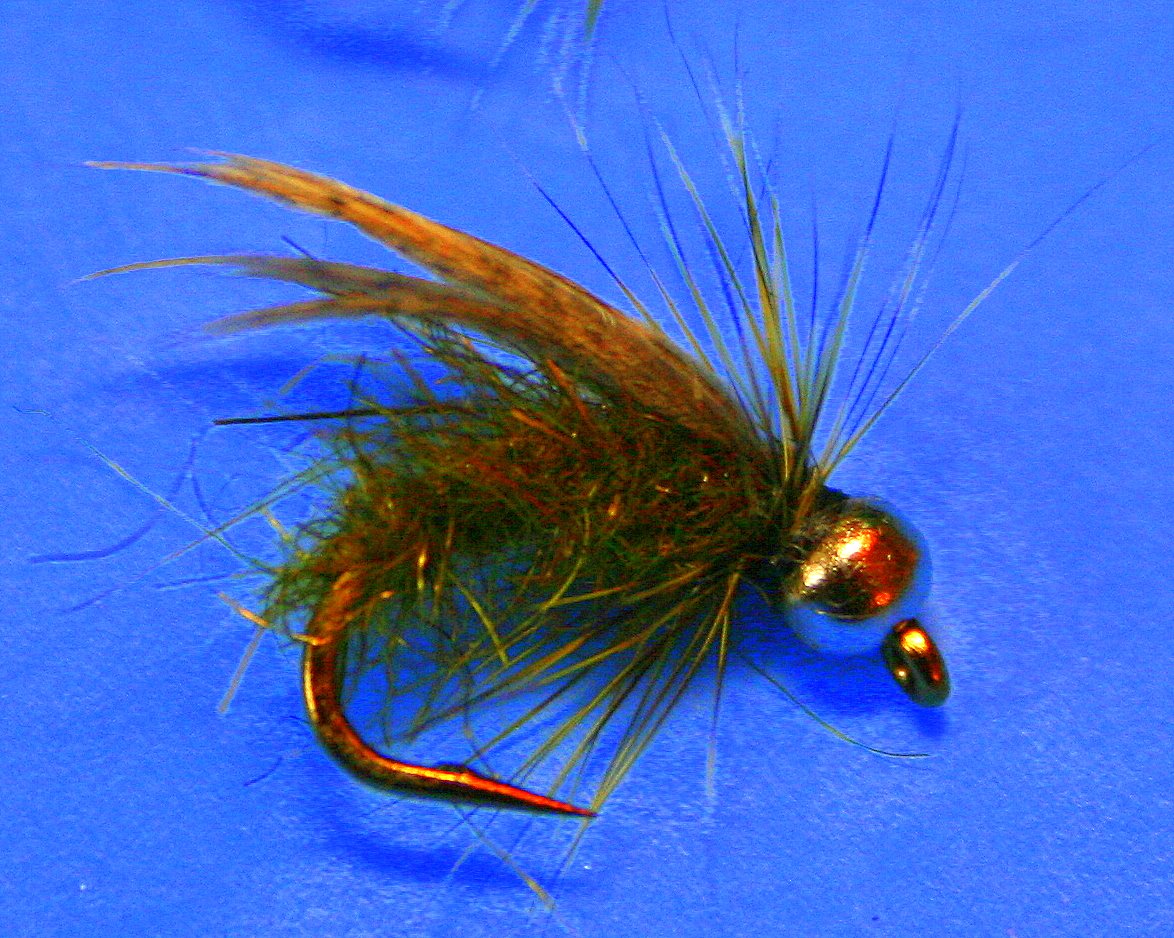
Short casts searching the edges of runs and seams. Standard pupa patterns or Czech Nymphs in all their variety are good choices.
 SwittersB & Exploring
Thank you. I appreciate it.
LikeLike
Justin,
The hook is the standard curved shank pupa hook and the size varies to size of caddis imitating. In this instance a size 6-8. The extended body could be created by two methods (one more static than the other). I used a dubbing brush that is often used to tie Czech Nymphs. It is two to three toned in color. The very thin wire of the brush provides the extension and the bugginess of the dubbing is nice. The wing is from any hen hackle. In this instance it was from a bird named Harriet..hence the name. The wound hackle can be several feathers like Partridge or in this instance Starling. The bead is typically gold but any non-hot color will work. The other way to extend the body is to dub longer fibers near the rear and brush them out slightly. As the fly gets wet the fibers trail behind. I have written many posts re Cz Nymphs here and I have bought materials from fellow in Calif. at http://www.flytyingspecialties.com/ There is also Jan Siman at the horses mouth so to speak.
LikeLike
Do you have a recipe/site for that pupa pattern? I like the extended body and would like to try it.
LikeLike