
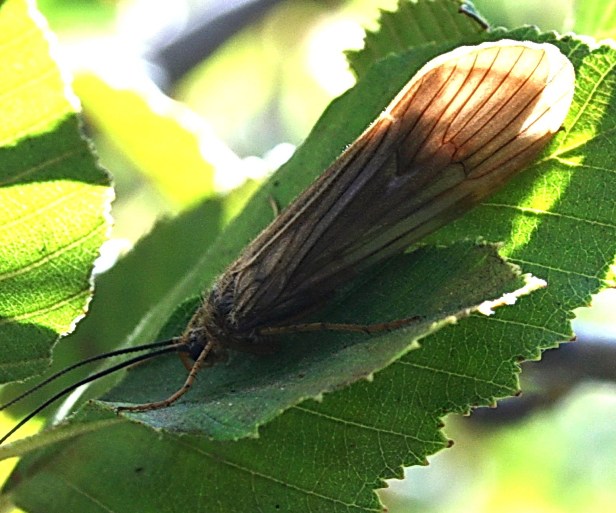
The October Caddis are available at current edges or slower water by June or July according to Westfly, where I imagine they stage or prepare for the late Summer hatch.

Entomology, Fish, Fishing, flies, fly pattern, flyfishing, how to fly fish, how to tie flies, Photography, Rivers and Streams

The October Caddis are available at current edges or slower water by June or July according to Westfly, where I imagine they stage or prepare for the late Summer hatch.
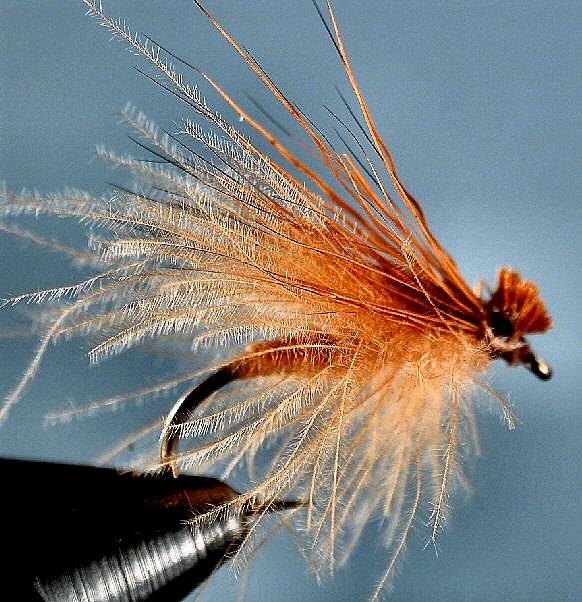
“There are apparently a number of different sub-species in what is commonly called October Caddis or Fall Caddis or Giant Caddis. Most belong to the family Dicosmoecus. They range from California to Alaska.
The larva of these giant caddis build tube-like cases. During the winter months when the larva are tiny, these cases are made from vegetable matter attached to a foundation of silk. As the larva grows in size through the spring months they abruptly switch to cases made from small gravel. You can observe these larvae crawling around on the streambed dragging their cases with them as the forage for algae and decaying plant and animal matter. During the the summer months of June and July Dicosmoecus larvae are important trout foods. Daily behavioral drift cycles occur in the early afternoon, usually peaking about 4:00 P.M. They are one of the few families of caddis that leave their cases before behavioral drift cycles. This makes them extremely enticing to large trout. In August these larvae seal themselves in their cases and by September they are ready to emerge as adults.”
 SwittersB & Exploring