Most of us seem to attach some reverential honor to the trout, grayling, salmon, pike, steelhead, bass, bonefish or many other revered species. We admire the power, the cunning, beauty or uniqueness of the fish that has come to our fly or lure, or that we wish would come to our offering.
If we are successful in luring the hungry or aggravated fish to our creations then how do we treat it? Into our dry hand, dry net, float tube apron, stream or lakeside gravel and grit or boat’s bottom? Most of us has been told to wet our hands before grabbing or hoisting a fish. Why? Well, I had some sense about the protective slime and significant removal can provide a portal to infection. However, the is a bit more to this.
“A fish’s slime layer is full of glycoproteins secreted by cells in the fish’s skin that help protect against parasites, protect wounds from secondary infections and fungus, help retain electrolytes, and may help the fish swim faster with less water resistance. In fact, fish slime is being studied by pharmaceutical labs to create new antibiotics. Since the fish slime is so important, the fish should be handled as little as possible with a minimum of rubbing, rough or absorbent surfaces contacting the fish.”
This portion about ‘swim faster’ caught my eye. Apparently, a significant removal of slime onto a surface via net, glove, towel or some surface greatly reduces the fish’s efficiency in swimming and thereby stresses the fish and opens it to disease. All this is moot if we simply quickly kill the fish. However, we are prone to C & R. We pride ourselves in our effort to sustain the species, to revere the fish to maybe capture a pic and to return the fish with a sense of accomplishment and self satisfaction. So, well intentioned champions of our finned friends, careful with the net, apron and dry hands because we want to not only protect the fish from invasion of disease from our aggressive handling, but also the increased stress drag while swimming with reduced slime.


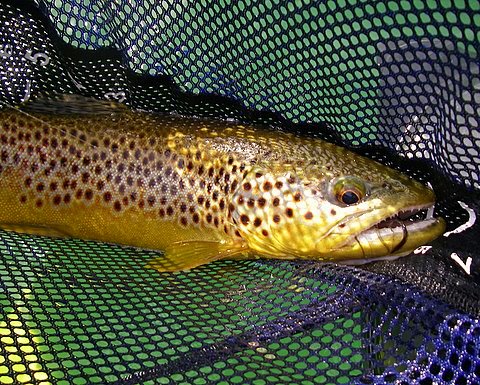
 This portion about ‘swim faster’ caught my eye. Apparently, a significant removal of slime onto a surface via net, glove, towel or some surface greatly reduces the fish’s efficiency in swimming and thereby stresses the fish and opens it to disease. All this is moot if we simply quickly kill the fish. However, we are prone to C & R. We pride ourselves in our effort to sustain the species, to revere the fish to maybe capture a pic and to return the fish with a sense of accomplishment and self satisfaction. So, well intentioned champions of our finned friends, careful with the net, apron and dry hands because we want to not only protect the fish from invasion of disease from our aggressive handling, but also the increased stress drag while swimming with reduced slime.
  SwittersB & Exploring