

Caddis, Chironomid, Mayfly, Scud…the simple pupa pattern is simple in silhouette and design. The basic fly then lends itself to the bead and/or the wing. Keep it sparse and the pattern can be tied in different colors, although I have a proven comfort with green.
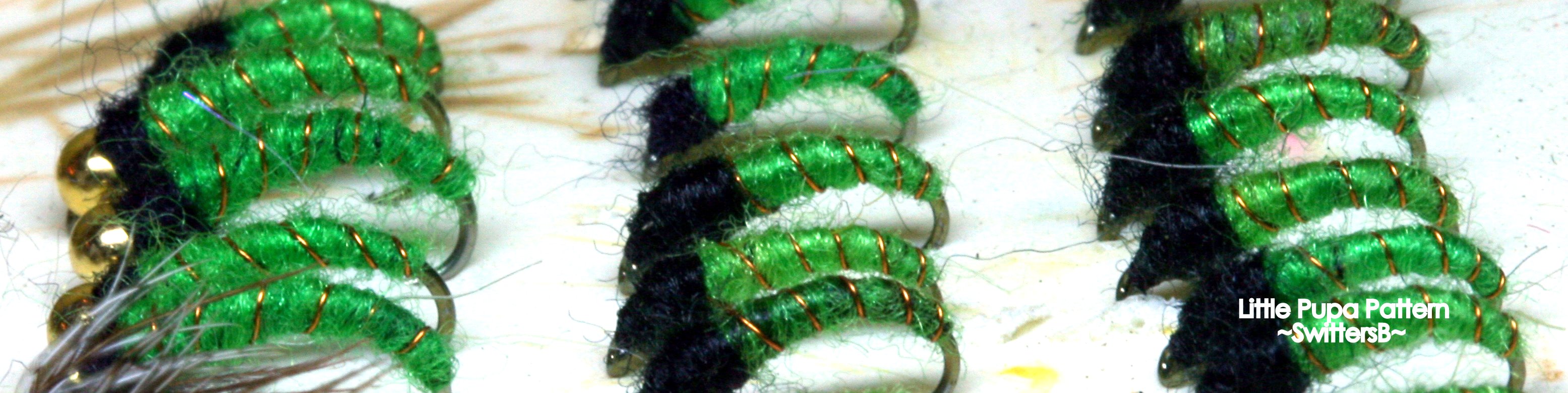
The pattern can be tied on hooks ranging from size 10 to size 18. Today I tied size 16’s and 14’s for the bead heads. I used the curved pupa hook, but you could use a straight shank hook.

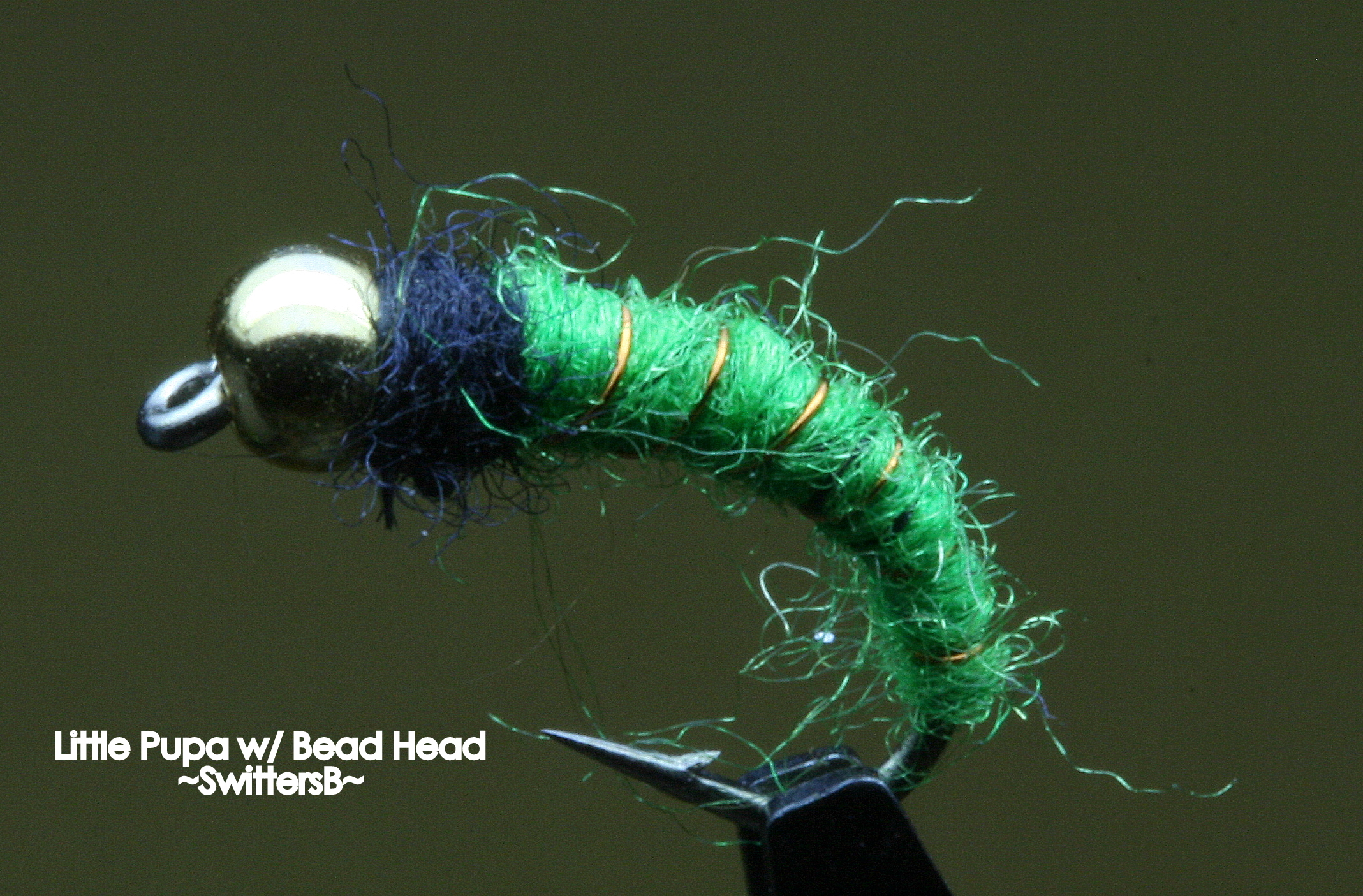
Depending upon the size bead you use, you may have to crimp the barb down, which you would anyway if practicing C&R. For straight shank hooks be certain the bend of the hook is a sproat bend, a more circular bend, which allows the hook to slide up around the bend and up the shank to the eye. A more confined bend (Limerick) will thwart the application of the bead.
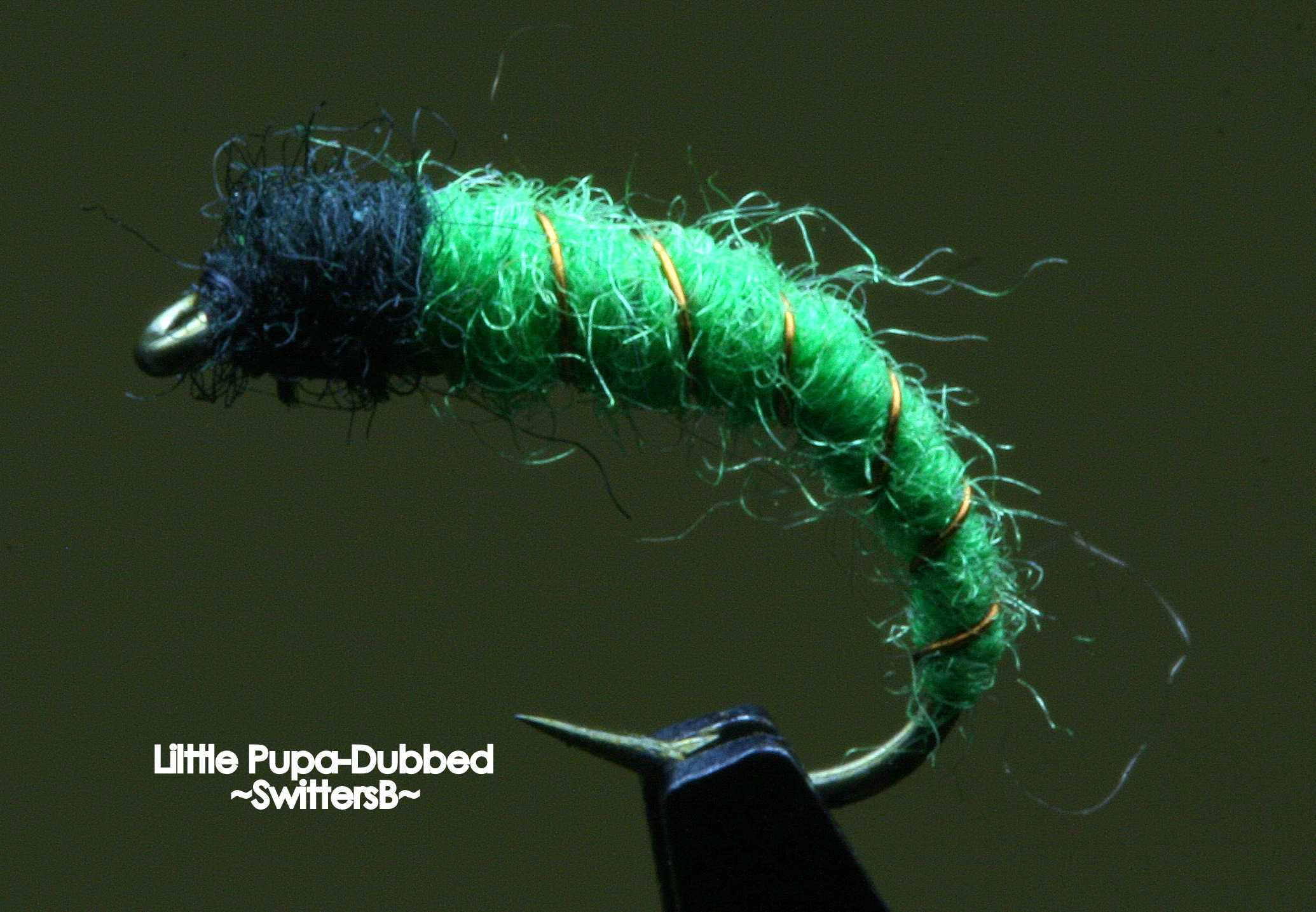
I used 8/0 black thread. The dubbing was a synthetic blend of sparkle dubbing with no spikiness. Insect green (Caddis Green) depending upon the manufacturer and black were used. I dubbed to the thread as opposed to a dubbing loop and was careful to dub sparsely. A copper wire rib was used.
How To For Basic Non-Beaded Pupa:
Put hook in vise…attach thread..wrap to rear at bend…tie in copper ribbing…dub abdomen with green dubbing…wrap copper wire ribbing up abdomen spacing wraps to give segmented appearance. If wraps dig into dubbing and disappear then counter wrap over dubbing so that wire lays over top of dubbing wraps or grooves…tie off wire and cut (not with tips of scissors, further down on blades)…dub black thorax same thickness as abdomen…tie off the head.
If you were going to add the bead head then it is the first thing to do…slide the bead on and then apply thread and tie as described above. If a wet fly is desired then the starling or partridge wing is wrapped just ahead of the thorax (allow enough room for this and don’t crowd the eye). If you want a bead head-wet then the wing goes on as a last step right behind the bead. The rest of the fly is the same…built upon the basic dubbed pupa. Excellent Dubbing Information.
Fished alone or as a dropper in smaller sizes, the simplicity does not detract from the fly’s effectiveness. More is not better, except in our obsession to over tweak every pattern. There is a reality of the simple fly, well presented and attended to does catch fish. Most adornments beyond that are for our appreciation and artistic bent.

 SwittersB & Exploring
I wondered if it makes a difference which way you wind. I am left handed and tend to wrap to the left. I don’t know much about it, and my “aunt” said to ask you. I don’t see where it should make a difference. I tried to wrap it to the right but could not get it tight or striaght.
thank you
Nate
LikeLike
Hi Nathan…hope your staying warm over there! If you are left handed that is no problem and you will soon have an eye for tying just by looking at a right hander tie or by seeing the pattern. For you, you will tie in, most often, to your right at the bend of the hook and progress up the shank to your left. I would advise that when you wrap you wind away from you over the top rather wrapping toward you and then going under, if that makes sense. The counter wrap is the exception of that suggestion when you wrap toward you to overlay a ribbing cross wise to the grooves you created when wrapping a body material. Confusing I know. When you wrap up over the top keep tension on the thread and as you drop over the top and move down behind the hook (far side from you) maintain that tension all the time. Any relaxing or slack will often cause the thread wraps to jump or bunch. Have you taken fly tying lessons? I believe Kel said you were or have taken lessons from a notable FFer there, who owns a shop. I you have taken lessons then always write and I will help however I can. Have a good Thanksgiving…SB
LikeLike
Thank you, yes it does make sense. My friend who has the fly shop has been busy but helps me a lot. We have a bunch of guys here who read your site. They are all right handed and have tied a long time. They didn’t have the answer. They said I was lucky if I could ask you. I have had a few lessons. Mostly about the vises, the hooks and the tools. That means the thread holder would help keep it tighter.
It makes sense to wrap away rather than towards me. Thank you. I really do like tying the flies. I appreciate the help. I am glad my aunt gave me your website. I read it every day. My favorite is when you show the flies you tied.
Yes it is cold here. Uncle Kelly is coming there this Friday. He is a good fisherman but can’t tie flies very well. Happy Thanksgiving SB.
thank you
Nathan
LikeLike
Always feel free to write here or email too.
LikeLike
Very nice!!
LikeLike
We were just talking about you, came to the site and wanted to comment on the wet flies. Real nice!
LikeLike
Very helpful and interesting.
LikeLike