

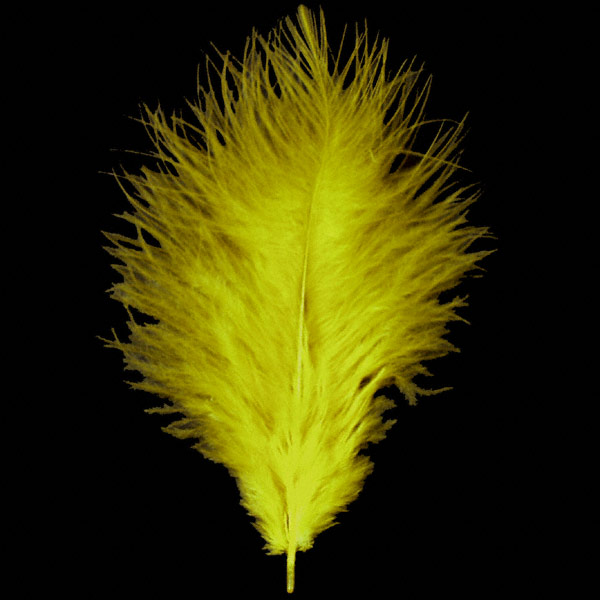
So many fly tying materials bring a special something to fly tying..be it peacock, ostrich, hare’s mask, partridge etc. One such material is marabou . It provides the suggestion of life whether you think to impart motion or not through your presentations. In the above photo, you can see that I pinched off a dozen fibers (more or less) from the plume’s stem. I had already tied in a burnished copper rib. I tied in the tail over the hook barb (my frequent tie in reference point). It is important to tightly secure that tail with minimal thread wraps. Because once it is secured the remaining material (marabou fibers) are wrapped up the shank toward the eye to form the abdomen of the fly. If the tail is not secured then as you begin to wrap the remaining marabou up the shank, the torque of the initial wraps will cause the tail to rotate away from you out of alignment.
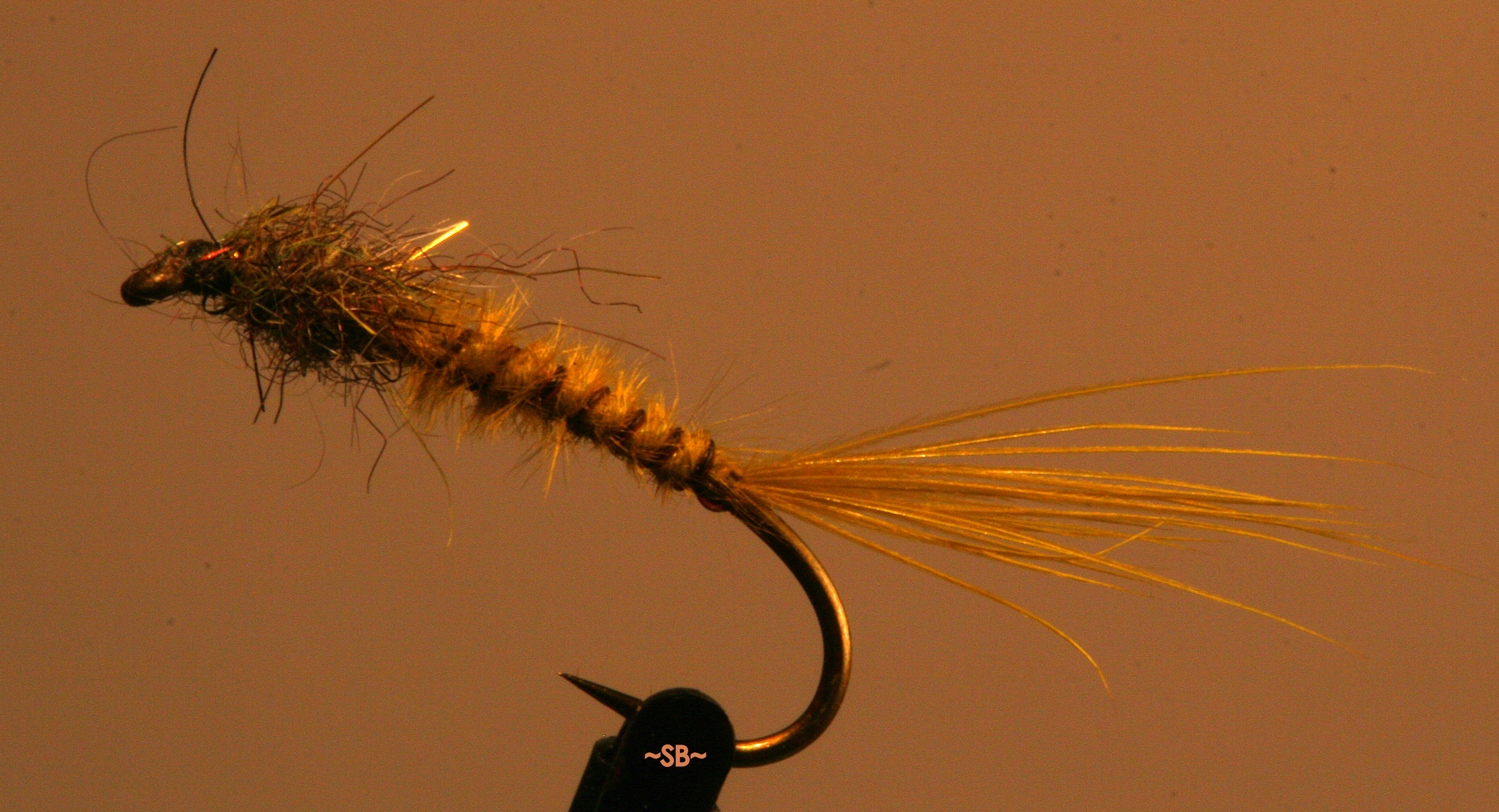
Once the body is tied off up near the thorax region, the wire ribbing is wrapped up to form a segmented body/abdomen. Can you see how the marabou provides a suggestion of gills that are typical of some mayfly nymphs? (Ostrich does this as well) A small thorax was dubbed on using a synthetic dubbing material with copper highlights. This pattern is suggestive of mayfly nymphs, emergers (fished high) and could be a small damsel fly. As you look at these patterns, and the simplicity is in your face, it is possible to discount the pattern as not sophisticated or complex enough. Seriously, simple is better more often than not. More complex patterns are ok for the tier that requires more challenge in tying and creativity. For the fish, refusals may not be due to simplicity but more than likely to your presentation. Make it more complex if you must….but, you will come back to where you started sooner or later….simplicity.
 SwittersB & Exploring