

From an aesthetic point of view, the renegade fibers (thread, feather, fur, dubbings) can look pretty chaotic to the camera lens, fish eye and human eye in larger sizes. I often rationalize the random twitches of material as suggestive of life and in no way a detractor to a fly’s effectiveness. A frequent troublemaker in the finished look of a fly is the errant hackle fibers that protrude forward when they should either be standing straight up (dry fly) or swept back (wet fly). I will demonstrate a simple wet fly that shows a tie in method (cutting the butt end of the hackle to form small comb teeth effect to better secure tie end thread wraps) and when the hackle fibers run amok, how to sweep the fibers back to the desired 45 degree angle.
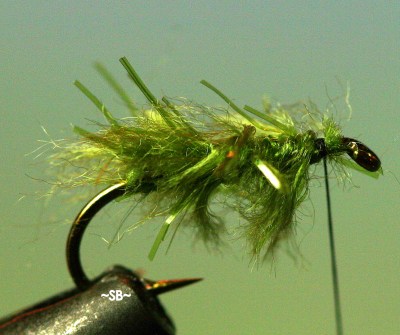


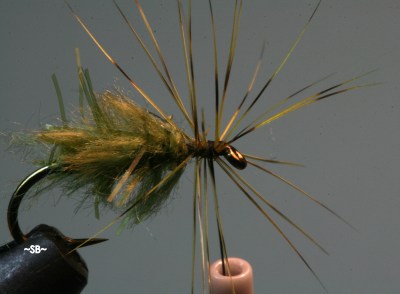
I probably could have advanced the body further up the shank toward the eye another turn.

In the above picture from FlyAnglersOnline, you see the hackle fibers stroked back between the pinched tips of the thumb, forefinger and middle finger. When you see that you have captured all the errant fibers (hackle and dubbing fibers) (this may take several times) wrap thread wraps to bind down the swept back fibers. Don’t over bind them too much; they should be raised at a 45 degree angle.
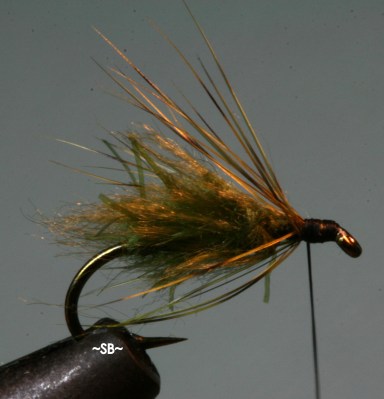
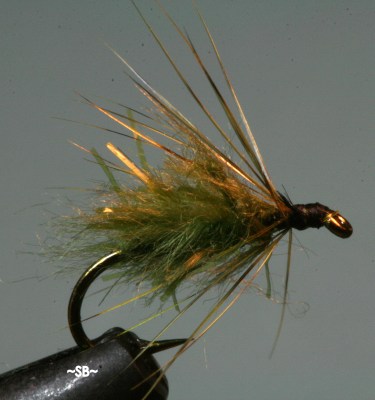
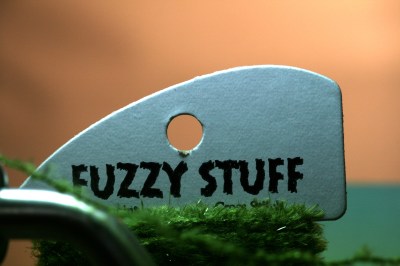
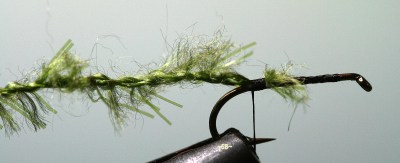
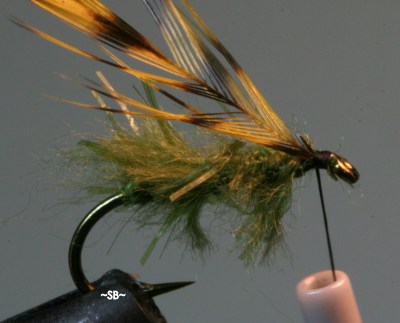
This is a straight forward wet fly: black 8/0 thread, size 14 hook, small micro chenille like material, two wraps of hen hackle. The fibers are swept back and secured with thread wraps, which continue to form the completed thread head.
 SwittersB & Exploring