

Dubbing….whether you twist it on the thread, or position the dubbing between the two strands of a dubbing loop or even split the thread and insert strands of dubbing….then wrap the dubbing onto the shank….it produces that fibrous look that suggests life in the water. But, there is another dubbing technique, touch dubbing, that I have used for years (LaFontaine technique). It creates a fibrous, buggy body. I use it for the thorax, but you could dub and entire shank with it.
TOUCH DUBBING TOUCH DUBBING TOUCH DUBBING
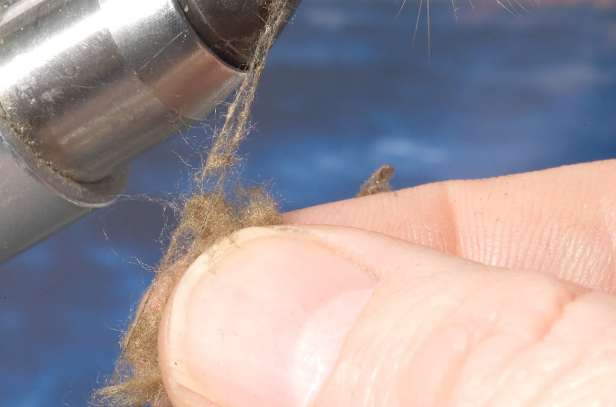
A good, tacky wax is key, which is applied to your thread. Don’t overdo it with gobs of wax on the thread, which then have to be removed. Your impulse will be to use your finger tips…don’t. Use a small piece of paper towel. One of the aggravators of tying is wax on your fingers and dubbing attached to you and not the thread. Also, be forewarned that the dubbing wax stick can be knocked over and its attractive/magnet qualities are legendary. All manner of dubbing, thread, marabou….all the fly tying detritus on your work station will find that wax stick tip…trust me. If it does get globbed up with too much gunk, gently wipe the tip with a paper towel to skim off the accumulated fuzz.
Back to touch dubbing, the tutorials suffice. Don’t overdo the dubbing. Whether you touch dub to a single strand of tying thread or a dubbing loop, keep it light. After you wrap the dubbing, use an old toothbrush or velcro on a popsicle stick and brush out any stray strands of dubbing. Remember just a touch will do. You are striving for a halo, shroud, transparency over the hook shank or a sub-body already wrapped onto the shank.
 SwittersB & Exploring
I have used tacky waxes for touch dubbing but not as much for twist dubbing. If you are using dubbing that is primarily hair/fur (rare these days) or a blend of synthetic & fur (rabbit usually) or straight synthetic, a touch of wax may help. If you are using the ‘super fine’ dubbing blends then no wax should be needed. A simple, one directional twist should suffice to afix the dubbing. I know some advocate a back and forth dubbing twist, but for me, I do not find that helpful. Don’t use to much dubbing as that is often the culprit. Good luck.
SB
LikeLike