

I have had great success with a dragon fly nymph while fishing lakes. I have previously mentioned the Fuzzy Dragon, Kaufmann’s Dragon Fly Nymph and the Doll’s Hair Nymph. I have had, equal or superior success on a lake with a dragon fly nymph as with a Woolly Bugger.
So, I noted recently that I am down on my inventory of the little bug eyed gems. So, tonight I am going to tie up a dozen Dragon nymphs and more this weekend. The pattern below is fairly easy to tie with a few sticking points if you crowd the eye of the hook. I picked a blend or earth tones for the patterns, excepting the contrasting ribbing materials. Click on each pic several times to enlarge for details (it’s ok, I can handle the scrutiny and criticism).
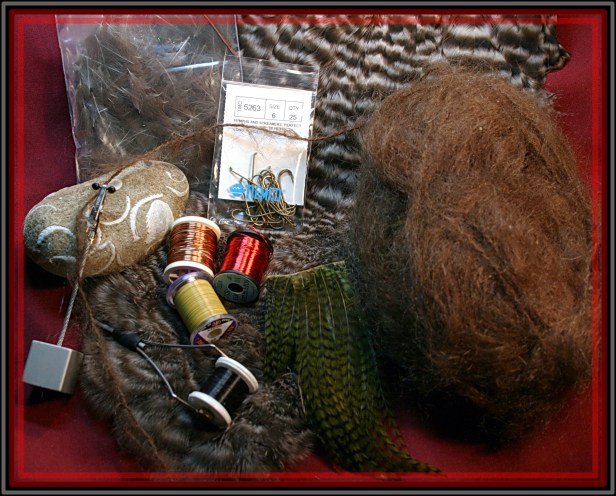
Hook: TMC 5263, Size 6
Tail: 2 plumes of grizzly Hoffman Chickaboo, tied bushy and short
Eyes: Plastic Dumbbell eyes tied in with figure 8 wraps to stabilize eyes on top of shank
Weight: Optional. I tie some with lead/titanium and some without. It should get down to the bottom
Thread: 6/0 black
Body Material: Dark Brown Fuzzy Mohair yarn, wrapped up the shank and around the eyes
Wing Case: In one I tried Turkey feather and in the others bunched dark brown CDC
Ribbing: I experimented with red, tan and copper wire
Hackle: Dark green barred hackle wrapped in around thorax behind eyes
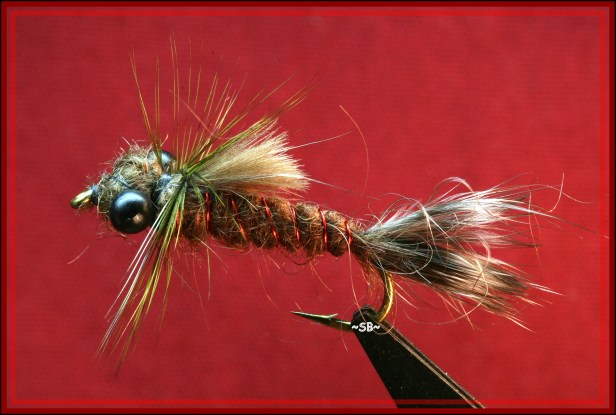
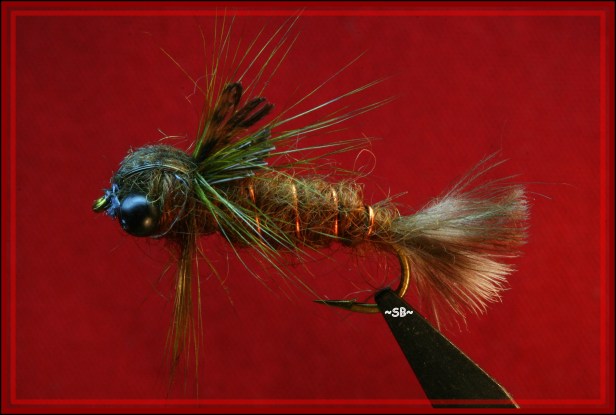
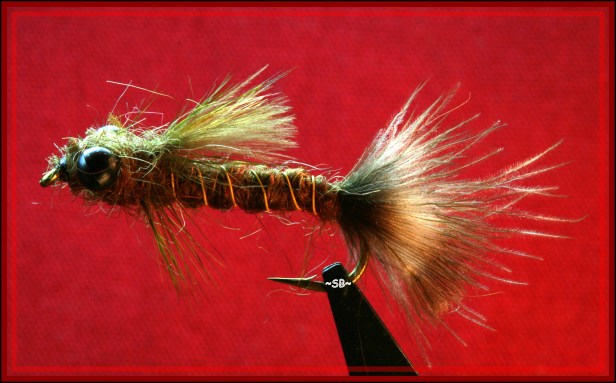
Nothing too fancy here. I enjoy the big eyes and stout body. I search for areas on the lake with the structure of weed lines (edges of weed beds), lily pads and grass lines. Cast the fly in with the appropriate line (sink rate=depth being most frequently fished). I most often use the Intermediate line. The dragon fly nymph is a predator. It stalks, darts, grabs, consumes. I don’t just kick about trolling. Visualize the fly down there and manipulate the fly as if it is a predator. Scuff up the bottom, dart about (short bursts, don’t go crazy) and let it lay. The hits are often sharp and certain. Study the habits and motions of the insects you emulate.
 SwittersB & Exploring
thats a sweet looking fly…simple and clean…going to add this one to my collection also. what type of retrieves do you use with this fly and what gear set up do you prefer when using a float tube on the lakes? i have a 7’6″ 4wt and 9′ 7wt with floating, sinktip and sinking line setups for each.
LikeLike
Hello Andrew…
Quite a few variables, but water depth, weeds, wind, water clarity, weighted/unweighted fly, probably size of fish encountered etc. influence rod and line selection. The rods you have are fine. I sometimes fish 3, 4 and 5 weights with my floating line depending on the probable fish to be encountered. For all other fishing..probably 90+% of the time I fish a clear Intermediate on a 4 to 6 weight rod (I would research newer versions that have less memory and do better in cold waters…as coiling can be an issue with older brands/models). I have the full sink lines and a sink tip, but honestly rarely use them unless a special set of circumstances arises (like with full sink…I will fish the Type 6 and get it down with a short leader and fish with a fully floating dragon or ‘boobie’ type pattern that will raise a foot or so off the bottom…anchored by the full sink line on the bottom. You have to know your bottom to not get hung up). If you are in a float tube (in the water or slightly elevated) a longer rod in easier to cast. I most often fish 9’6″ to 10′ rods, but your shorter rods are fine and no need to spring for another rod at this point..but some day maybe consider a longer rod if fishing bigger lakes. Retrieves are based upon impressions in my mind of how an insect would react in the water whether moving/darting/jetting/wiggling/swimming/rising-falling.
I try to trigger a strike by the fly pattern and the presentation of the fly (most importantly). Really mixing up the retrieves until something clicks is ok, but do try to think beyond kicking or rowing around waiting for a strike. Wind drifting is a fine method too…and sometimes I anchor up and work an area at the drop (from the shoal that slopes down into deeper water). Good luck…hope that helps…I think you might enter ‘stillwater’ into my search box and see what you get for presentation etc. but that may yield too many hits….best wishes.
LikeLike
Thats a great looking fly, thanks for the info. Will have to add this one to my fly box
LikeLike