

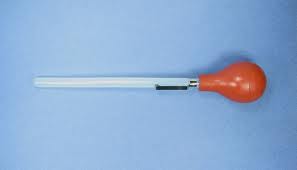
Personally, I think stomach pumps should be the last thing any self respecting fly shop or on line fly fishing resource should offer to the fly fisher. Oh, the sampling can be most enlightening, but more often than not (no I don’t have any statistical data) I would imagine the device is misused and causes harm to the fish.

I mean just look at that stillwater sampling of mega chironomids, damsel fly and mayfly nymphs. How much easier now to tie on the correct size and color of an imitation. But, seriously, you want it that easy? While potentially doing harm to the fish? I will say this is one thing (the only thing probably) in which, I think Brian Chan errors. A fishery biologist, such as he, knows how to use a simple, crude device as a stomach pump and has a theoretical need to study food samples from fish and the health of a lake or river. The rest of us can study up and forgo the pump. I don’t believe I have seen a presentation by Mr. Chan in which the pump is not presented and demonstrated at least on lakes. He takes great care to use cradles to land fish and is obviously respectful of the fish. Others, I am not so sure of.
Is there available written data on the hatches/aquatic life of the body of water you intend to fish? What patterns imitate those food sources? Where are they likely living, emerging, drifting, etc. in that lake or river? At what time of day do they provide the best food source for the fish? What months are they best available? What do other fly fishers tell you? What techniques are you seeing successfully used and where on the body of water?
When you get to this body of water, what do you see? Are there visible hatches? Are birds feeding above the water? How are the rise forms of the fish (sub surface slashes, porpoising, sips, engulfing wallops, airborne projectiles)? What do you see on the water’s surface, nearby vegetation, on the rocks? What is possibly protruding from the fish’s mouth you are about to release.
Stomach pumps may provide that extra reassurance of what to use, but given the probable harm you will cause (if catching and releasing), forgo the pump and use your brain and power of observation more often. Unless you are Brian Chan and/or a fishery’s biologist?
 SwittersB & Exploring
I am a fish biologist and aquatic entomologist, I have handled thousands of fish in my life in both hatcheries and in the wild. I cringe to think that a casual fisherman would think that a stomach pump would be an essential item to carry into the field. I have used stomach pumps with success and have not caused harm to the fish I have sampled, but I understand fish physiology and how to handle the fish to acquire a good sample. This tool in the hands of an unwitting user is going to be a deadly tool.
Nothing beats good observational skills and a little research before heading out. There are no more unknowns out there. Every single insect and hatch time for every body of water on earth is available somewhere out there on the internet.
Learn to use google and you will never need to pump a stomach again.
I carry an aquarium net, kick seine net, thermometer, glass vials, notebook and pencil, preservatives and binoculars when I am out. With these tools, I can capture and identify what the fish are feeding on, note the date, time, temp and location on the vail and collect a few specimens for reference at the tying desk.
The learning curve is short but only moderately steep. Find a friend or take a class and call your local fly shop and learn about the insects and when or where that they are active and you will save a fish.
LikeLike
I have used a pump with good success to gather samples. Truth be told, I have fumbled around more than once in gathering the sample and over stressed the fish. So when I say ‘good success’ I mean I gathered great stomach samples to study but sometimes while harming the trout. In the end, I usually only gathered insight on how a real insect/nymph looked (size/shade of brown, green, tan). I eventually stopped using the device after struggling to revive belly up trophies….shamed myself into stopping the use.
LikeLike
I was taught to lift rocks; do kick seines and look about. Shops, guides, friends, strangers have provided very valuable intell of what is likely to come off. Seems archaic to stick a tube of plastic down a fishes gullet.
LikeLike