

If you have transitioned to fly fishing from gear, as I did many years ago, you may have a tendency to practice the hook set as you did when setting that ol’ treble hook loaded with Power Bait or whomping that 4/0 shrimp/egg cocktail into a Chinook: you snap upward hard and wait for the throb. I have found it better (most often, not always) to keep the tip down toward the water and set more to the side while stripping the fly line to the rear. A strip set of sorts. I found this particularly helpful last week while fishing beneath trees and shoreline vegetation, which protruded out over the water and the feeding trout.
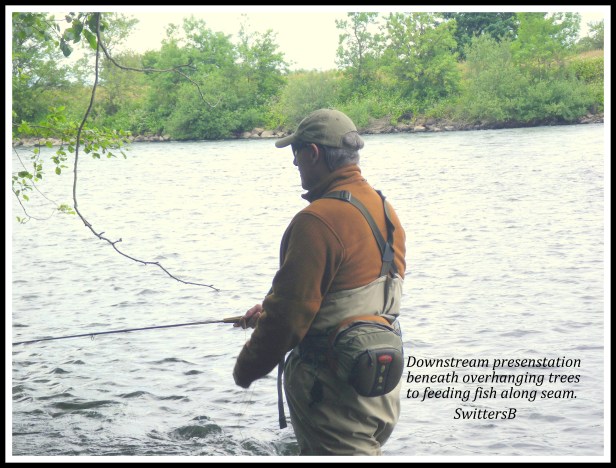
The strip set can be used on rivers and in a boat or pontoon rig. There will be always be exceptions dictated by the location of the fly line and how much slack/mends you have thrown in. However, if the line is mostly tight and the rod tip is following the movement of the line, a slip strike hook set will keep you tight to the fish. If the fish is big and the current plays in its favor, carefully let the line slip back out of your fingers until the fish is tight to the reel and the drag. If the fish is a dainty one, then you will often strip the fish in until you reach for the leader (wet those hands before touching a fish).
All things considered, it is a good idea to avoid sweeping, upward hook sets with expensive rods. Of course, regardless of what direction you move the rod, knowing your surroundings and what if-ing now and then in advance helps avoid that broken rod.

 SwittersB & Exploring