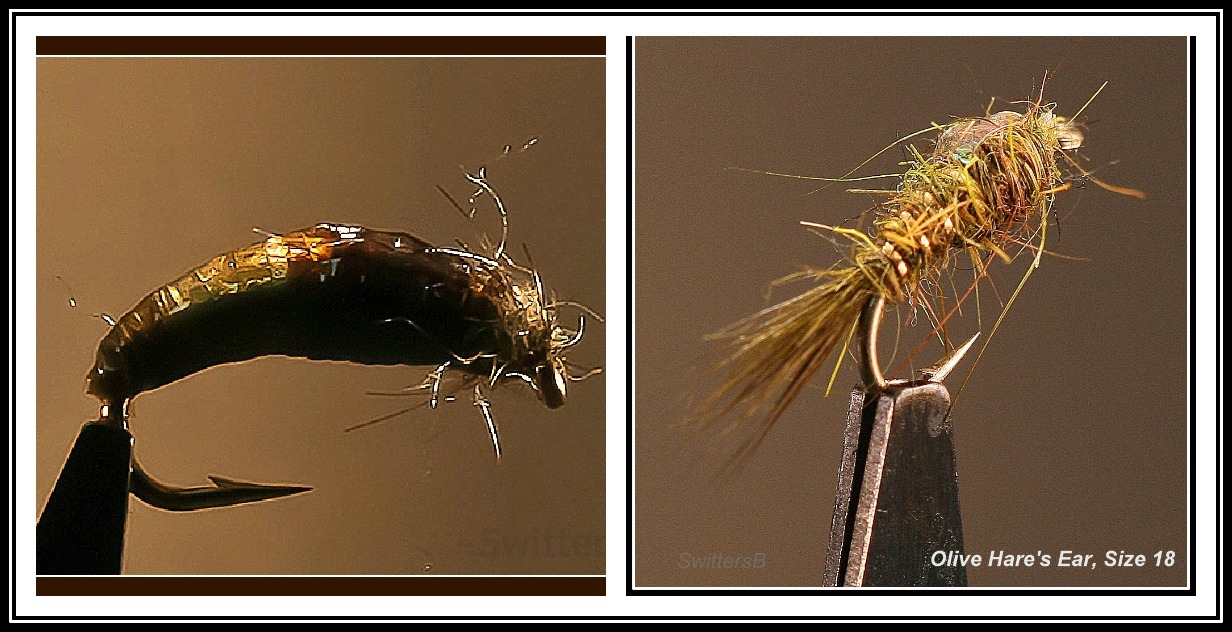
Over the last few years, fly tying has taken the nymph’s form and made it sleek, denser and a synthetic affair. A bead, wire, synthetic dubbing, a few feather barbs, polyester film make up smaller, sleeker fast sinking nymphal form. Not so long ago, buggy, shaggy, fuzzy nymphs with a bit of wire/tinsel ribbing were the norm. Good to have both in your box. The new materials do make it easier to tie a smaller nymph that travels deeper and suggests the necessary shape.
If I added up the thousands of fish that I have caught and then discounted all the ones taken on a shaggy hare’s ear nymph I think I would have then to conclude that I wasn’t very good at fishing and decide to take up golf or bowls or something instead. So yes I still tie a lot of shaggy “could be anything” kinds of flies because I figure that with them on the line I am always in with a shot. Many great anglers have been enamoured with the mobility of fly patterns. Polly Roseborough (Fuzzy Flies), Silvester Nemes (The Soft Hackle Fly Addict) and it is that essence of life that frequently outperforms perhaps more rigid and close copy patterns. In modern parlance “Hare’s Ears Rock” 🙂


 SwittersB & Exploring
If I added up the thousands of fish that I have caught and then discounted all the ones taken on a shaggy hare’s ear nymph I think I would have then to conclude that I wasn’t very good at fishing and decide to take up golf or bowls or something instead. So yes I still tie a lot of shaggy “could be anything” kinds of flies because I figure that with them on the line I am always in with a shot. Many great anglers have been enamoured with the mobility of fly patterns. Polly Roseborough (Fuzzy Flies), Silvester Nemes (The Soft Hackle Fly Addict) and it is that essence of life that frequently outperforms perhaps more rigid and close copy patterns. In modern parlance “Hare’s Ears Rock” 🙂
LikeLike
Yes, indeed!!!
LikeLike