

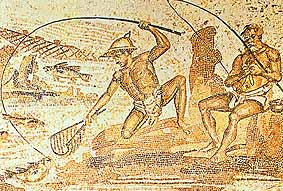
“I have heard of a Macedonian way of catching fish, and it is this: between Borœa and Thessalonica runs a river called the Astræus, and in it there are fish with speckled skins; what the natives of the country call them you had better ask the Macedonians. These fish feed upon a fly peculiar to the country, which hovers on the river. . . . In boldness it is like a fly, in size, you might call it a midge, it imitates the colour of a wasp, and it hums like a bee. The natives generally call it the Hippouros.
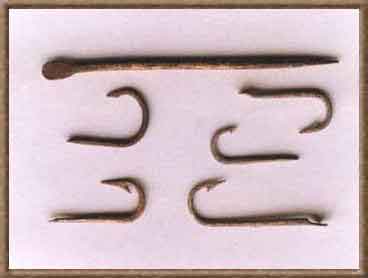
They fasten red (crimson red) wool around a hook, and fix onto the wool two feathers which grow under a cock’s wattles, and which in colour are like wax. Their rod is six feet long, and their line is the same length. Then they throw their snare, and the fish, attracted and maddened by the colour, comes straight at it, thinking from the pretty sight to gain a dainty mouthful; when, however, it opens its jaws, it is caught by the hook, and enjoys a bitter repast, a captive.”
It was not until 1496 that proof is found showing people fished with flies for the sake of the sport instead of for food.
“… a line twice your rod’s length of three hairs’ thickness, in open water free from trees on a dark windy afternoon, and if you have learned the cast of the fly. . . . In 1652 The Compleat Angler, (not a spelling mistake) was written by Isaak Walton, then aged 60.
http://flyfishing.blog.dada.net/tag/the_history http://business.virgin.net/fly.shop/history.htm
http://www.flyfishinghistory.com/astraeus_looking_2.htm (Here you can explore 5 theories on Macedonian fishing. You can be an expert and provide all manner of details. Watch their eyes glaze over while you talk and then grab the last donut!
 SwittersB & Exploring
Hi, I would like to use the picture of the Macedonians fishing if possible can you let me know where that comes from please?
LikeLike
Stuart checkout this wonderful site for references and links. I posted this back in ’08 when I was less aware of attributions/crediting then now…sorry…http://www.flyfishinghistory.com/astraeus_looking_2.htm
LikeLike