

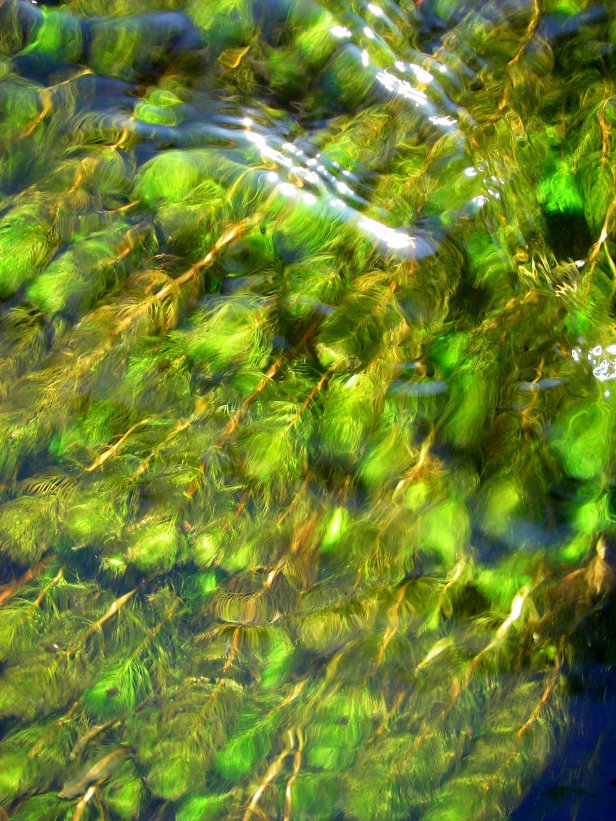
A prolific little fly fishing staple that likes those weedy, riffly runs that are pleasant to fish and behold. The nymphs are generally smaller (from 16 down to those pesky 20’s). Slender swimmers that can get carried into the currents in a late morning drift provide the opportune time to dredge with a nymph set up (whether you like a two nymph combo or a single nymph) work the riffles.
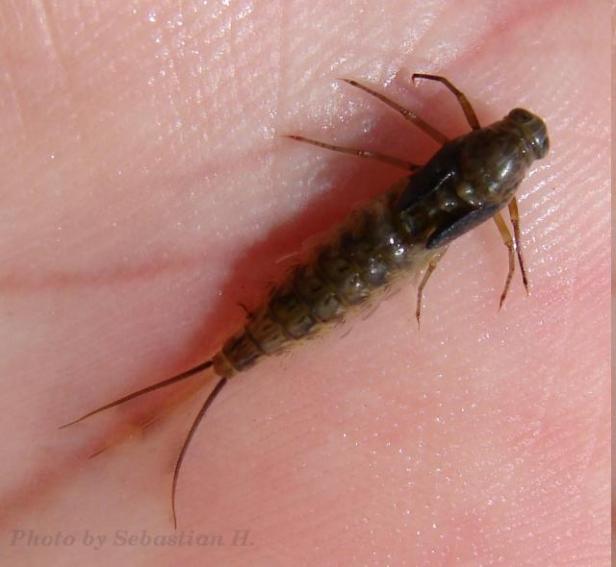
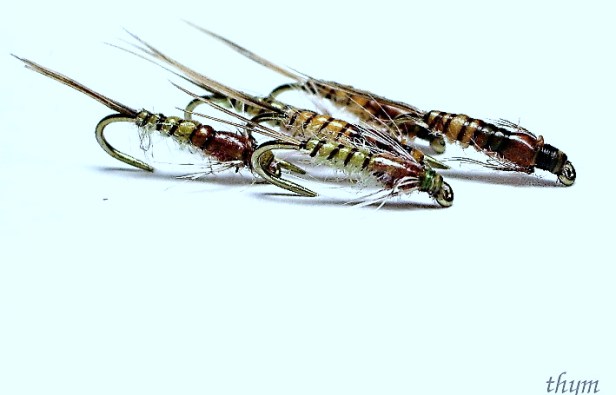
Research you local streams for hatch info and local pattern favorites. The above patterns are obviously beautiful to any tyer. Also, a simpler Pheasant Tail Nymph would work. Smaller, slender (swimmer, not chunky) and medium to dark in color.
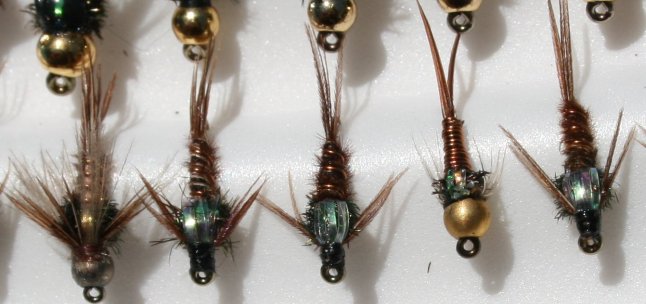
Fly Tying Instructions for PTN at Oregon Fly Fishing Blog . Planet Trout made a great suggesting, reminding me of the dark wingcase of the nymph…he uses black Krystal Flash for the wingcase and the legs..(see comments).
 SwittersB & Exploring
IN DISS OLL FLY HEWEN TUNGSTEN
LikeLike
Hello Adnan,
The flies, at the bottom, have brass beads. You could, of course, substitute Tungsten beads to create a heavier fly. Thank you for visiting.
SB
LikeLike
Hello SwittersB, nice websites 😉 I use Baetisis for fishing up the stream. They go about 30 cemtimetres under the surface and trouts often go for them from more than 1 metre deep. Regards Karel
LikeLike
Gary,
In my experience, Trout key in on on the black wing case nymphs as emergence begins. I fish the pearl KF variety BEFORE I start seeing the bugs come off the water and, I fish ’em deep…
PT/TB 🙂
LikeLike
Hey Gary, Try some of those PTs’ with 6 strands of KF pulled over and three strands pulled back on the sides. I like Black KF…
PT/TB 🙂
LikeLike
Thankyou, and now that you say that I recall reading about the darker wingcase in mayflies….good tip!
Gary
LikeLike