

The large morsel Green Drake is fish candy for sure. A typical Green Drake emerger will be tied to float in the film, dangling down to simulate the emergence of the dun from the nymph body through the split thorax. However, the wet fly, albeit large, has a place here as an emerging dun can emerge while the nymph is still subsurface and drifting in the current. I tied two patterns here. Both identical except for the abdomen.
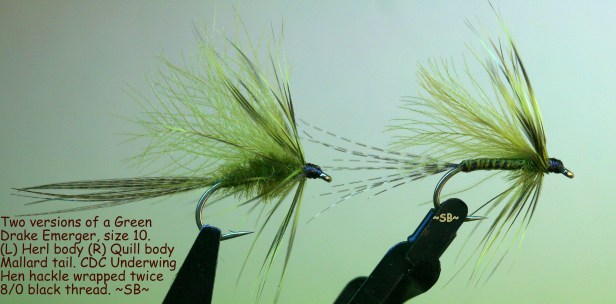
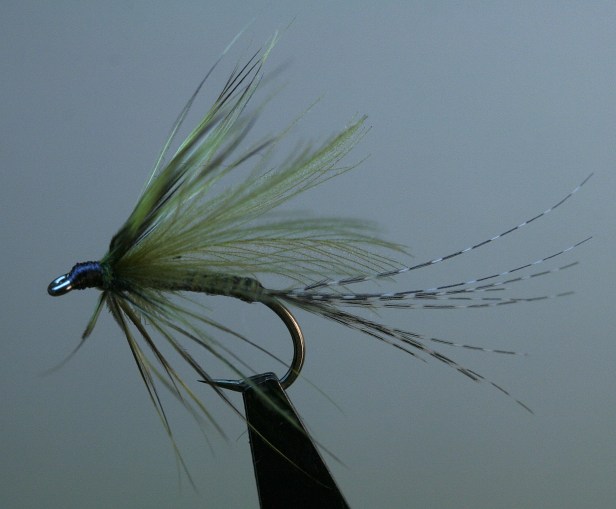
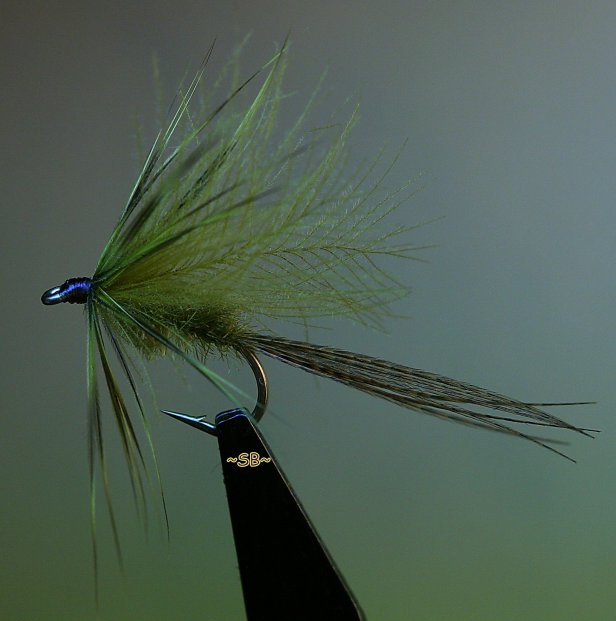 In Rick Haefle’s NYMPH-FISHING Rivers & Streams (A Biologist’s View of Taking Trout Below the Surface), he discusses the habitat of the Western Green Drake (Drunella) in freestone streams (fast riffles and runs with larger cobble substrate) and in cold spring creeks (gentler currents with aquatic vegetation and woody debris). As the nymphs mature, they migrate to slower water along the edges of riffles before the emergence. It is at this time of emerging, that the nymphs let go of their tight grip of the bottom and drift or “swim clumsily toward the surface film.” Nymphs/Duns will attempt to hatch at mid point all the way up into the film. The above patterns are more of a large wet fly to fish below the surface up into the film. (A Nice Pic Here at TU)
 SwittersB & Exploring