

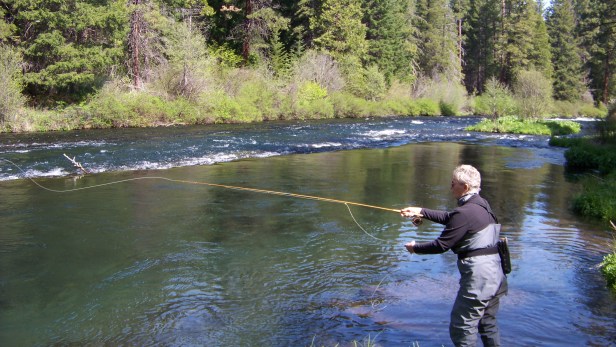
The beginning fly fisher is quickly advised to not only fish the dry fly. Statistics are thrown out that 80-90% of a fish’s diet is comprised of subsurface fair (nymphs/emergers). All this is meant to increase your odds of a hookup. An additional area that effects success is the setup or rigging of the nymph(s). A little time to study the rigging possibilities and match them to the conditions before you are on the stream is time well spent.
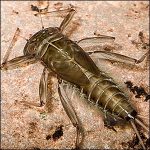 A couple things to consider: Adjust your setup as needed. Assuming you won’t stand all day in one area while fishing, you will encounter different water depths, speeds, hatches…that will require you, or should require you, to adjust your rigging/setup. Changing distances between indicator and flies (fly); adding weight; changing fly patterns, shortening the casting distance, raising or high sticking, whatever is required to adjust to the changing conditions as you move about is often ignored as the angler stays with the same rig.
As a beginner, keep it simple. As you encounter other anglers you will see techniques different than what you are using or were told to use. Different setups, different flies, different presentations. That is good…more than one way to skin the proverbial cat. (Did anyone actually skin a cat?)
 So, remember these observed new ways and try them. They may or may not be appropriate to the waters at hand, but tuck them away into the arsenal and remember how to rig them. An easy example is a two fly nymphing rig (sometimes 3 flies). I rarely use it for streams. Almost always on lakes. (Check the laws…I was comfortable fishing two fly rigs in B.C. until someone admonished me an educated me re B.C. laws on one fly only). Two flies theoretically ups the odds. But, for a beginner you want to learn to cast with a more open, lob cast to allow for the turnover of fly, weight, indicator. Two flies can get tangled until you perfect a more open loop. Once that is done go to two flies and keep your cast shorter. Actually, go short more often. Don’t be tempted to be nymphing with 30′ of line out. Go shorter most often. And, as they say strike on any hesitation of line or if you use one, the indicator. Purist abhor nymphing let alone indicators…whatever…use an indicator/sighter of some sort. Experiment without an indicator too.
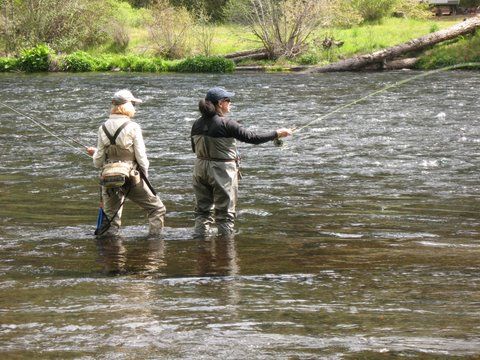
Nymphing is a lot more work than dry fly fishing…yet, it is a technique you must employ if you want to up your odds of an encounter. When the dry fly~emerger action commences know how to de-rig that nymph set up in a timely manner to get into the hatch.
STEVEN OJAI VISUALS ON NYMPHING RIGS
 SwittersB & Exploring
Darleen has been gone for over a year now, and I miss all her infinite wisdom.
LikeLike
She was/is a positive example of womanhood…like you.
LikeLiked by 1 person
Oh…and presentation is most critical at all times regardless of the type of fly fishing. Often as important or more so than fly selection.
LikeLike
Hello Hamid,
I can only speak in general terms and from my own preferences: It really often depends upon the backdrop. Overhanging trees, high grass behind, generally snaggy stuff to the rear can eliminate any hope of a backcast and force rollcasts or some variety of spey like casts. It you note the central photo in the post the ladies are out aways in the flow. There is ample opportunity to back cast there. However, a more frequent technique of more experienced nympher’s is to cast out and up in the usual fashion and follow the line downstream with the rod tip. As the line ends the drifts let the line swing down below you. This will create tension on the rod and as you raise the rod it should bend or load….then fling the whole rig back upstream and slightly out. Throw a mend or two upstream and gather up line as needed to maintain a tight line connection with the fly or indicator. Check out
LikeLike