

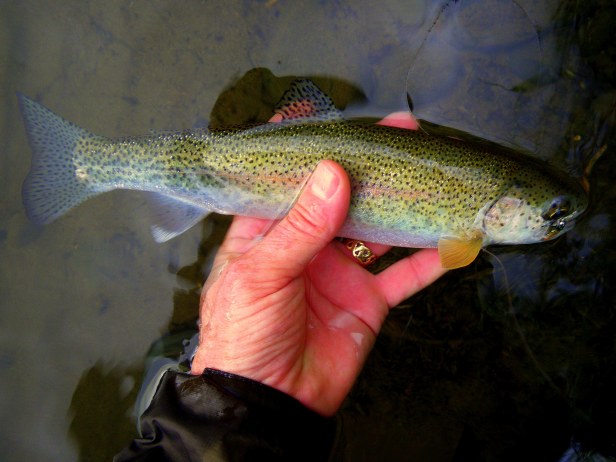
Back channels are sometimes those barriers to the main stem; waded across to get to the main channel and fish. Recently, I explored a back channel for trout. What I was struck by was all the insect activity in this small fifty yard stretch. Hatches fluttered along for several hours. Several trout were caught on Caddis pupa patterns. Large yellow mayflies glided down the stream like large sailboats. Tan Caddis fluttered about. Little Yellow Sallies (Sally’s?) lumbered toward shoreline vegetation. BWO’s and PMD’s flew up and away with the breeze. Midges hovered. All this activity and no rises, at least that I saw. Nymphs were called for. Trout were caught. Nothing big. Just feisty little beauties.
It was a pleasant few hours. A drift fisherman hovered nearby. He informed me that Summer steelhead were in and often held in the back channel. I offered to relinquish the spot so he could swing a bobber~jig through, but he said he didn’t want to intrude on my “private place”. It was special…a little small stream experience with a big river just on the other side of the island. I will venture back…maybe prepared for steelhead too.
 SwittersB & Exploring
Part of the fun!
LikeLike
I am only guessing. The water flow was not so great the fish had to exert much effort for the calories ingested. Water depth was 2-4 feet providing plenty of cover and the surface was disturbed, also providing a sense of security. I think or surmise the fish, and who knows how many there were, were quite content to hold in the moderate flow and pick off drifting and rising insects. It was overcast and had rained, but that seemed to be perfect conditions for the hatch at about 52 degrees. Perhaps, as much as I saw a variety of insects, there were not enough up high to necessitate feeding high. Heck if I know. Part of the puzzle.
LikeLike