

Steve Schalla @ (Fly Fishing the Sierra) offered an interesting piece on the impressionistic All Purpose (AP) Nymph (by Andre Puyans). The basic design is seen slender (swimmer) and heavier (crawler), yet basically the same. This is indeed a perfect all purpose pattern that can be tied in the range of colors and sizes to cover mayfly nymphs. The ubiquitous bead head is an option. Perfect beginner’s fly pattern that is very functional.
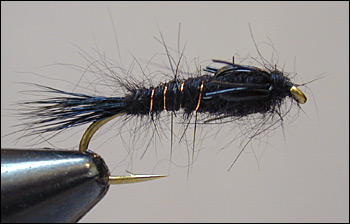
“He based the nymph design upon three main criteria: size, shape and color. The size and shape of the pattern was inspired by Frank Sawyer’s PT Nymph that Andre also made contributions to variations. The design of the nymph was based upon the knowledge that only certain nymphs were available to the the trout, the mobile types that swim and crawl within the trout’s environment.”
 SwittersB & Exploring
The answer re tying the fly, itself, is it can be unweighted, weighted on the shank, weighted with a bead. The hook itself can be weighted by virtue of ‘heavy’ wire vs. fine wire or regular wire. As the fly is shown, it is a heavy wire hook. It would also likely have wound lead/non-lead wire wrapped around the shank at the upper abdomen/thorax area and over wrapped with the body materials for the abdomen/thorax. Also, to a lesser degree the wire ribbing adds weight. A metal bead could be added for additional weight. That is the tying process. Also, the nymph can be unweighted and fished in the surface or subsurface as an emerging insect. If that is how that insect emerges in a stream or lake.
Also, what nymph are you trying to match? Just a searching pattern or more thoughtful? A crawler/clinger are stout nymphs and are near the bottom of the substrate. Swimmers or emerging nymphs need to be moving near the surface and more slender? Burrowers are often bigger monsters. So study the bodies of waters you fish and the year long hatches you fish over: BWO, PMD, PED, Hex, March Browns, Tricos, Callibaetis, Yellow Sally, Caddis, Stonefly, Midges…on and on. Know what the nymph looks like (size, build type, color) and how it acts in the water. Buy or tie flies that match your target insects and perfect presentation (very important) of that insect stage. Visualization of your rod movements/fly movements is critical. Best wishes.
LikeLike