

Oh my. We have witnessed some celebratory Piñata over the years. Having been invited to quite a few birthday parties by our dear friends from Mexico, we have held our breath as blindfolded children swung away while other children bobbed and weaved to avoid be coldcocked by a swinging stick, bat, bar and shovel handle. We have watched this in backyards, barns and basements (Winter time).
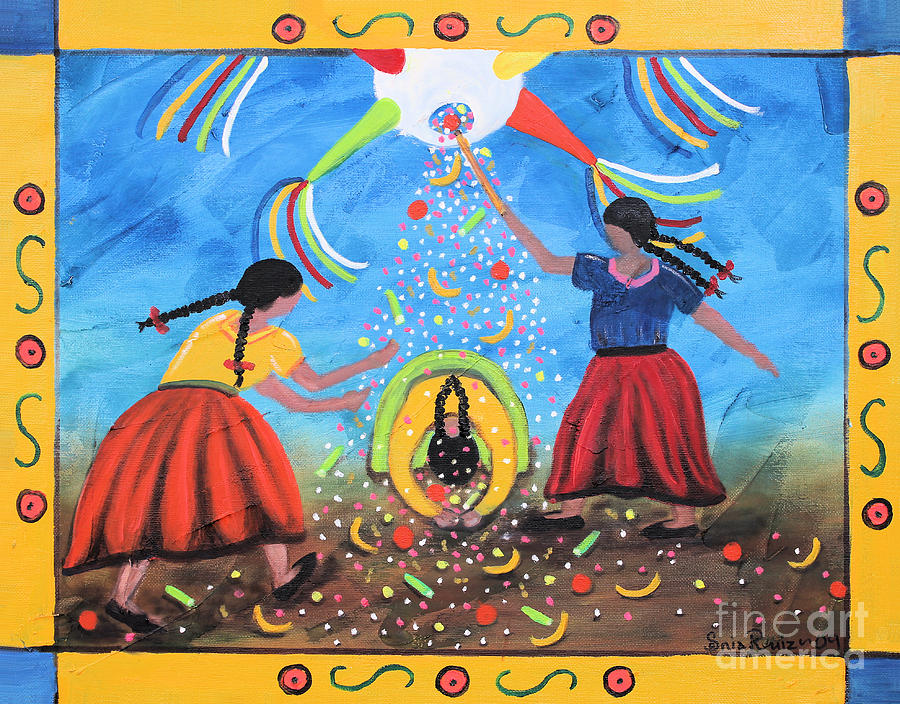
This morning, I was watching a program re the history of the Piñata. The show noted the origin was in Italy (Pignatta). The piece to be battered originally had seven protruding spikes, which represented the Seven Deadly Sins (Mortal/Cardinal). The Pignatta was representative of temptations or the devil and was battered to defeat temptation and the reward was the modest gifts contained inside that fell to earth with the defeat of temptation. Today, of course, candy usually falls to the floor.
I say usually because a few years ago, our backyard Piñata effort had a different ending. The kids swung away, battering the Piñata until it broke. But, kids and adults stood silent. Nothing fell out. Everyone looked at my Mom-in-law. “Where’s the candy?” She exclaimed “I paid $8.00 for that thing. You mean there’s no candy inside?!” She didn’t realize she had to fill it and reseal it.
The Pignatta tradition moved into Spain to become the Piñata tradition and eventually to the New World as a religious celebration to help instill Catholic values and compete with the native rituals. Today, the Piñata is less the religious ritual and seven spiked affair and more the celebratory event for kids.
If everyone is lucky, no one gets clobbered!!
 SwittersB & Exploring