
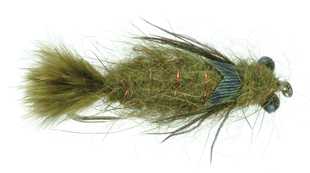
 I have mentioned this fly before. It will always be in my top ten stillwater arsenal. I have tied it in other colors that have been productive, but the green has always been extraordinarily successful. Get it down and work it slow like a predator. The occassional darting movements are fine, but otherwise tease away. It is not presented and maneuvered like a Woolly Bugger; no undulating, serpentine movements. I love this fly. Weight it heavy, or tie it lighter for shallower depths and build a flat abdomen. The under body can be built up from greenish yarn, then a dubbing is overlaid. I have used rabbit, squirrel or angora mixtures, but have always used the copper ribbing. The tail can be marabou or chickabou. The hackle legs can be hen hackle, grouse or partridge, but keep it a darker shade. Do not use weighted eyes so the fly rides upright. This is a usually a heavier fly, so watch dropping your arm on your back cast or you will drill yourself coming forward. Barb the hook….easier extrication from clothing and floating devices. Enjoy this fly…I can recommend it with honesty and ease.
Stillwater Arsenal~Kaufmann’s Dragon

 SwittersB & Exploring
This dragon is useful any where there are dragon flies and damsel flies. I live on the East coast
US and the dragon fly nymphs are a tad smaller but they are all over the place. In some of the lakes the fish (all species in the lake)eat these. If you are working it right, the fish will
just snatch it, so pay attention. 🙂 I have a pile of photo’s of one that had emerged and was metamorphing into a dragon fly.
Thanks for the post. Very useful nymph. I’ve used them successfully in small slow streams as well.
LikeLike
Most often dragon flies are from non-moving waters (lakes, ponds, stillwaters), at least in the Western US. There are exceptions to this: in stream’s or river’s quieter back waters or flows that are very slow can generate dragon flies. As with many things in FFing, there are exceptions…as in life. I consider a dragon fly and damsel to be two of my best flies on a lake, although charts will suggest they are of less import than say scuds and chironomids. A dragon fly pattern could always substitute for a stonefly nymph on a stream, but your color would definitely have to lean toward the dark side.
LikeLike
would you please send step by step directions and pictures for tying the kaufmans lake dragon nymph. thanks pete changaris
LikeLike