

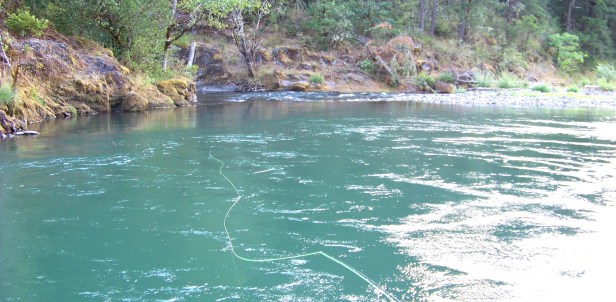
Dry-Fly Line Mending Principles
In general, there are two main principles to follow while mending your line while fishing a dry fly:
- The angler should use upstream mends to compensate for faster flowing surface current between the angler and the end of the fly line.
- The angler should use downstream mends to compensate for slower flowing surface current between the angler and the end of the fly line
Wet-Fly Line Mending Principles
In general there are two all-purpose principles to follow in wet fly line mending:
- The angler should use upstream or downstream mends in order to achieve an initial drag-free drift for the fly. This free drift will in turn allow the fly to sink down in the water column.
- When the desired depth is reached, the angler will again mend the line, but this time across the faster flowing current. Fast moving water will cause the belly of the line to be pushed at a faster rate, resulting in an upward swing of fly as it passes its respective target. (Bass Pro Shop…yes, yes, good enough for April…good enough for you).
 SwittersB & Exploring
You only catch fish if you fish where they are. I have fished some bars that almost drown me, then I learned to stay more safe by some techniques like side stance using a roll cast when in “rougher” water. I like the article, very useful.
LikeLike
I assume you were using a floating line, fishing BWO’s? How you were casting, standard cast or roll casting, can determine how the line lays out and the amount of time to adjust (mend). How deep you were wading impacts arm movement, how comfortable you feel, how well you are observing vs. feeling scattered. I would always pick your spots, for some time to come, to give you the comfortable advantage in wading and body comfort. But, obviously you pick water for where the fish and bugs are, or suspected to be. You could be fishing in fishless/bugless water but feeling darn good with your casting, mending, wading. Balance is key. Pick fishy water and wade safe. And, don’t let anyone push you beyond your limits or comfort zone. A good mentor or partner should respect your limitations and assist you in being potentially successful and safe. A good guide understands this. Their success depends upon you being successful. Any way…time on the water is key. Hard to do with snow melt, run off, freshets etc. Study your local streams this Winter; look at the river levels and know when the weather patterns suggest less rain, the freezing level is dropping (less snow melt), study the hatches for Winter, then Spring and know where those insects hatch on a stream and at one time of day. Study the Oregon Fly Fishing Blog (excellent) and go into your favorite shop (TCF) for current conditions/suggestions.
LikeLike